
How to Search Cumberland County Court Records
Cumberland County uses two main search systems. The county OnBase Web Viewer holds civil court files. Pennsylvania's UJS Web Portal holds statewide dockets for criminal, magisterial district, traffic, and appellate cases. The county Public Records page sets the date ranges. Clerk of Courts criminal files run from 2001 forward, Prothonotary civil files from August 2001 forward, and both update daily. Juvenile and other non-public files are left out.
Before you start, gather what you know. A full name helps. A docket number or citation number helps more. The county site is the place to confirm which office to use.
Here is the official county homepage, which links to every court office and the online record tools. See the Cumberland County government site for the full directory.
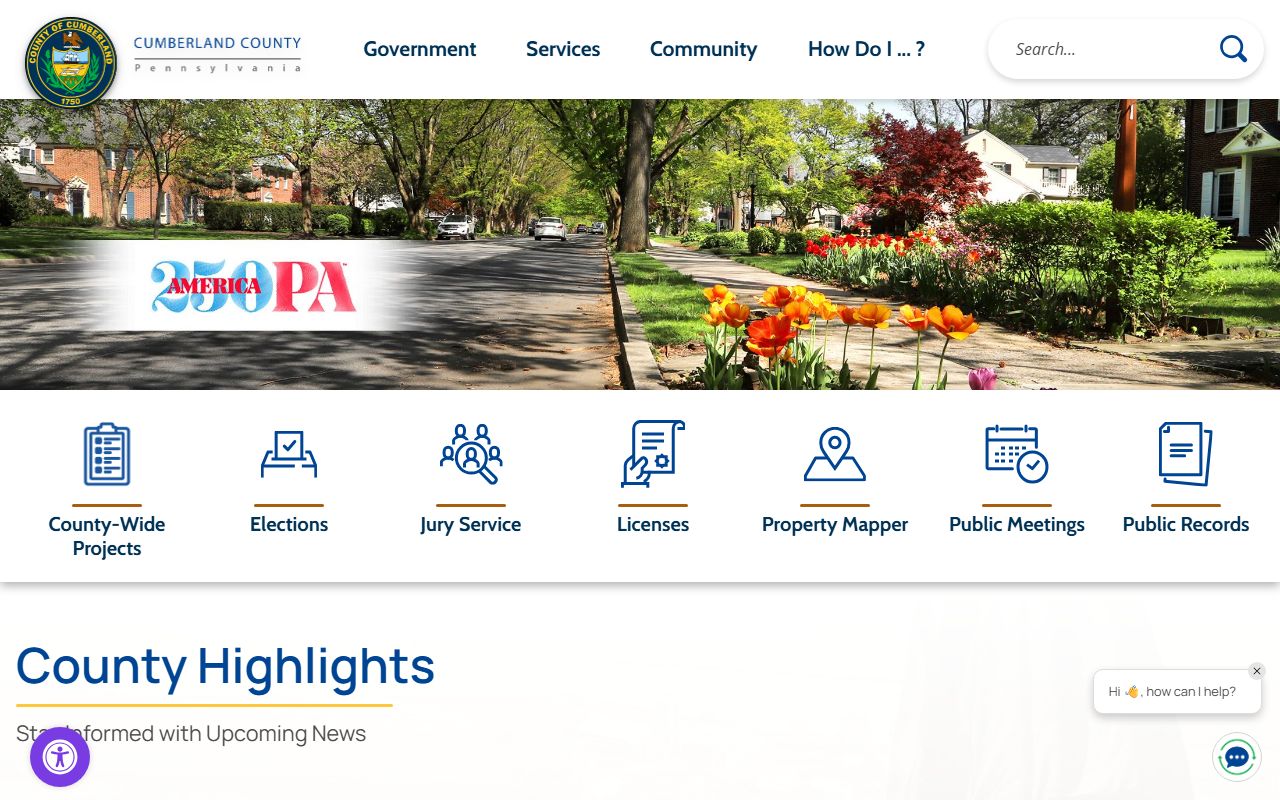
From that homepage you can reach the Prothonotary, Clerk of Courts, Register of Wills, and the Courts landing page in a few clicks.
- Decide the record type. Civil goes to OnBase; criminal, traffic, and MDJ cases go to the UJS portal.
- Open the right tool. County civil files load in the OnBase Web Viewer; statewide dockets load at the UJS Case Search.
- Enter a party name, docket number, or citation number.
- Narrow by county, court office, and date filed to cut the result list.
- Review the docket sheet, then buy a document copy or request a certified copy from the clerk if you need one.
Note: county pages say online files update daily, but the UJS portal warns that recent entries may not show right away.
The Cumberland County Judicial System
Pennsylvania runs a single Unified Judicial System, and Cumberland County is Judicial District 09. At the top sits the Supreme Court of Pennsylvania. Below it are two intermediate courts, the Superior Court and the Commonwealth Court. The Court of Common Pleas is the general trial court for the county. Below that are the Magisterial District Courts, the minor courts that most people meet first.
The county has seven Common Pleas judges, including a President Judge, who serve ten-year terms. Ten elected Magisterial District Judges serve six-year terms. The county also runs a Central Court process to streamline DUI cases at the magisterial level. Appeals from a district court judgment or a summary conviction move up into Common Pleas, and from there to the Superior Court or Commonwealth Court.
The state court system explains this pyramid in plain terms. The Pennsylvania courts learning page lays out each level and what it hears.
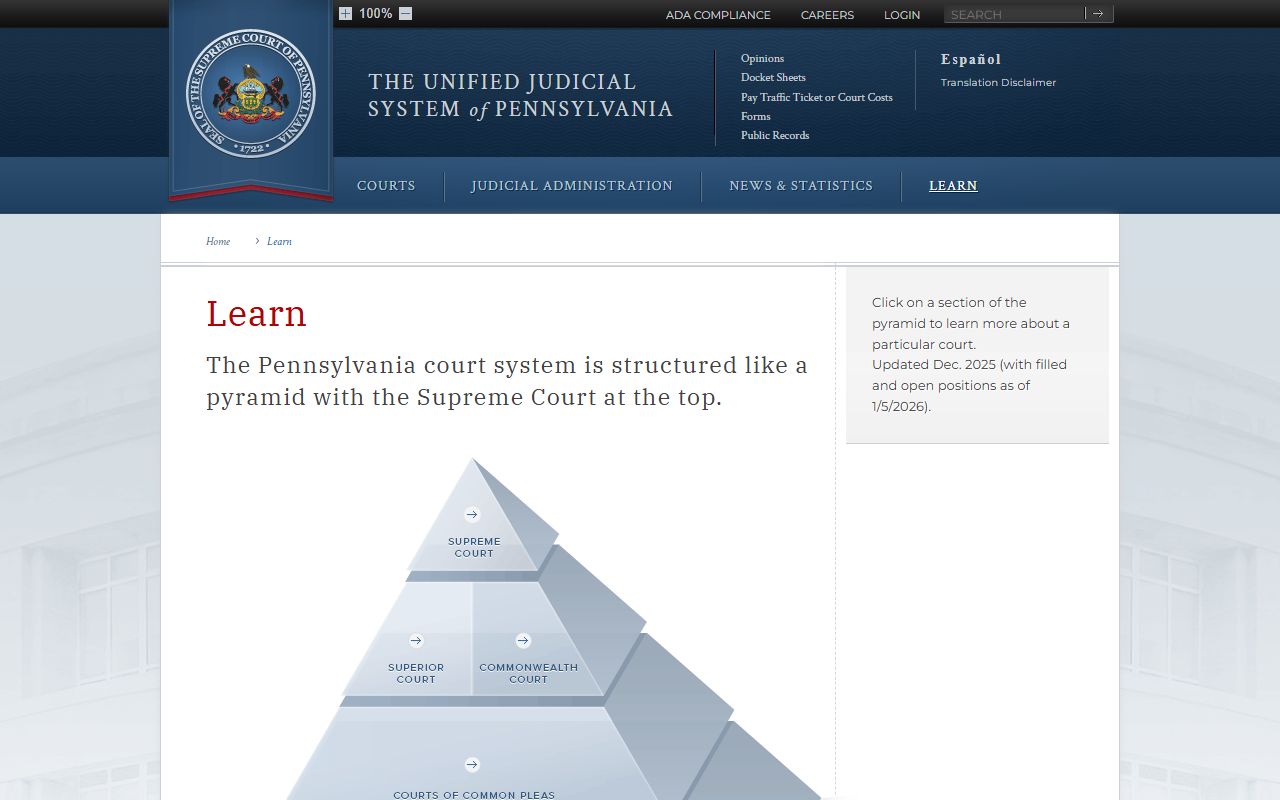
That structure is why one case can carry a magisterial docket number and later a Common Pleas docket number after it is bound over.
The county groups its court offices on one landing page, from the Prothonotary to the Register of Wills. The Cumberland County courts page lists each office in the system.
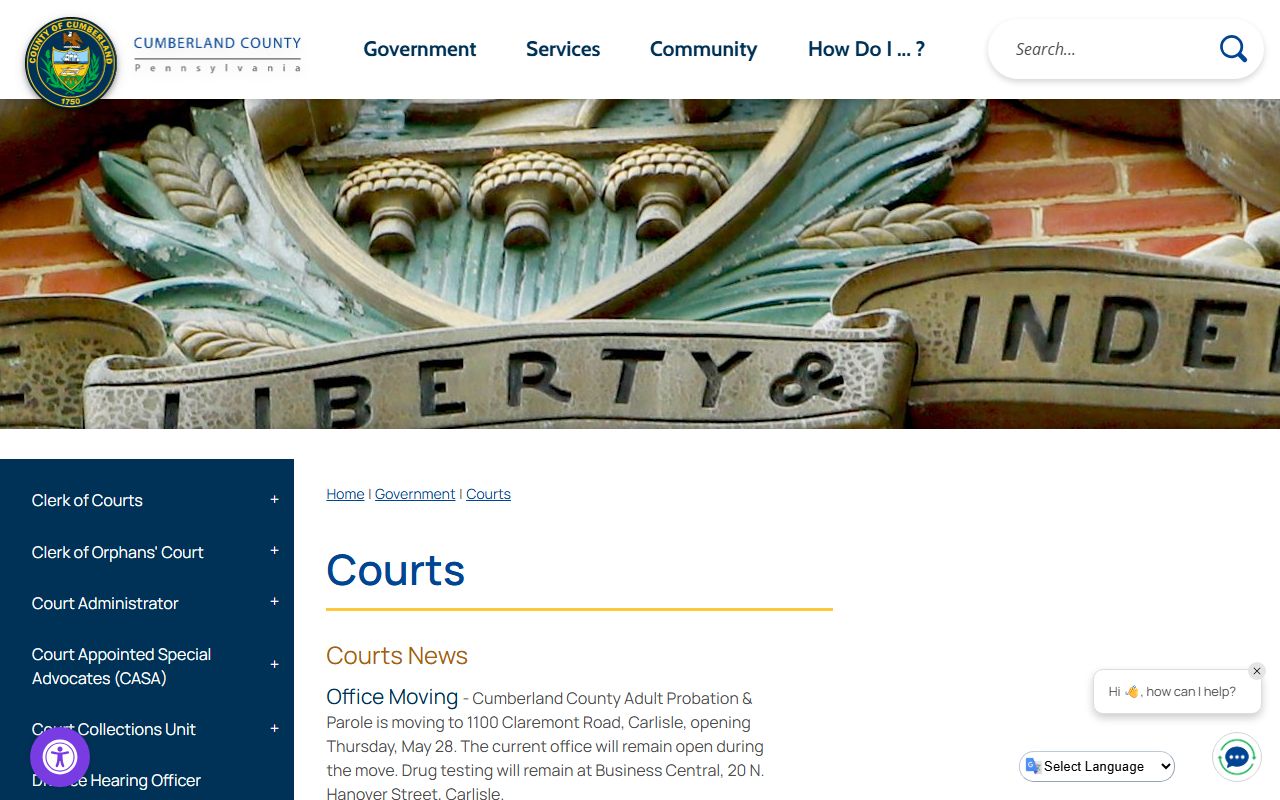
That directory is a good map of who keeps which Cumberland County court records.
Case flow: Magisterial District Court › Court of Common Pleas › Superior Court or Commonwealth Court › Supreme Court of Pennsylvania
| Court | Jurisdiction | Case Types |
|---|---|---|
| Magisterial District Courts | Local, minor | Traffic, summary offenses, landlord-tenant, small civil claims, preliminary hearings |
| Court of Common Pleas | County, District 09 | Serious crimes, major civil, family, divorce, custody, juvenile, Orphans' Court |
| Superior / Commonwealth Court | Statewide appeals | Most criminal and civil appeals; government and regulatory appeals |
| Supreme Court of Pennsylvania | Statewide, final | Court of last resort |
Cumberland County Courthouse Offices
Most court business happens at one address: 1 Courthouse Square, Carlisle, PA 17013. The main county phone is 717.240.6100. The catch is the suite. Civil filings, criminal files, marriage licenses, and probate each have their own office inside the building, and you pass through security before you reach the first-floor counters. Know your suite or room before you go.
The county keeps an official facility page for the main courthouse. View the Cumberland County Courthouse facility listing for location detail.
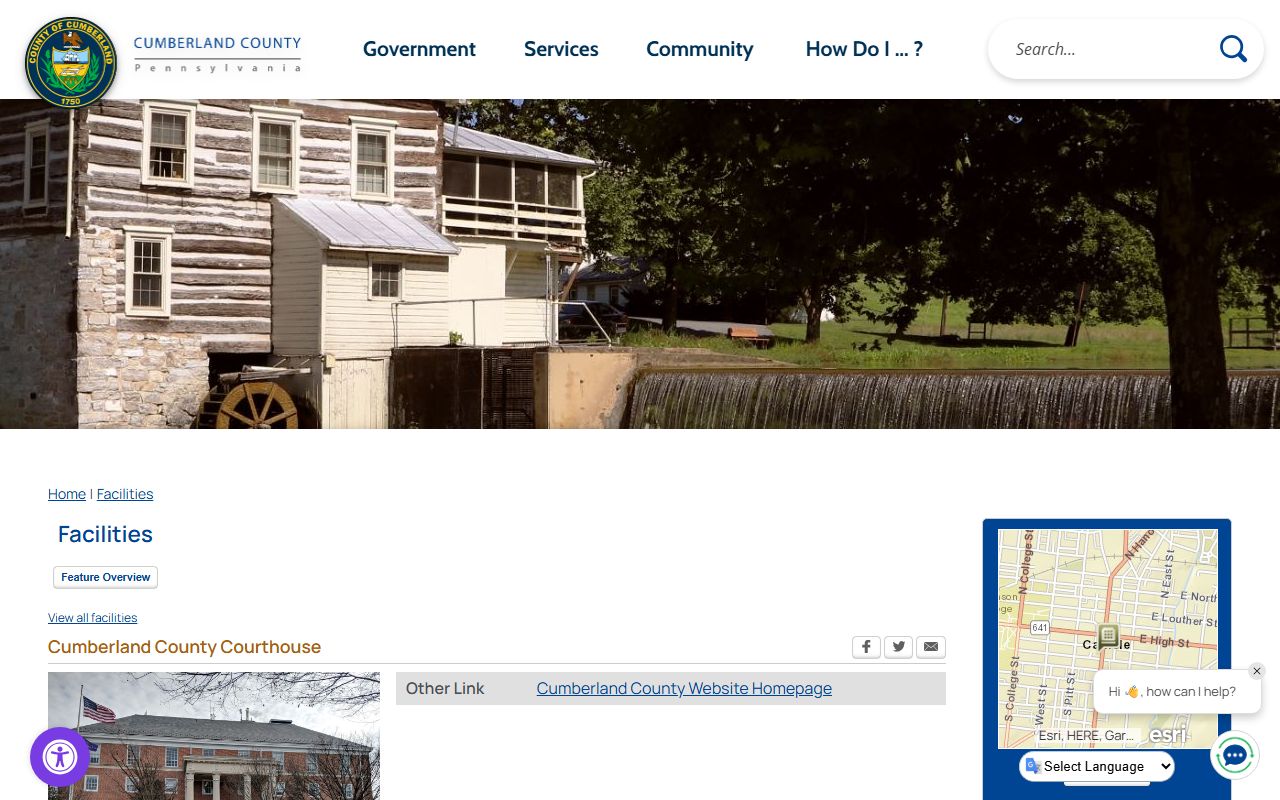
The jail is a separate site. Cumberland County Prison is at 1101 Claremont Road, several miles from the square. The office cards below show where each record type sits inside the courthouse.
Prothonotary (Civil)
1 Courthouse Square, Suite 100
Carlisle, PA 17013
717.240.6195
Mon-Fri 8:00 a.m.-4:30 p.m.
Clerk of Courts (Criminal)
1 Courthouse Square, Room 205
Carlisle, PA 17013
717.240.6250
Mon-Fri 8:00 a.m.-4:30 p.m.
Register of Wills / Orphans' Court
1 Courthouse Square, Suite 102
Carlisle, PA 17013
717.240.6345
Mon-Fri 8:00 a.m.-4:30 p.m.
Types of Court Records Available in Cumberland County
Court records here fall into a handful of groups, and each group lives with a different custodian. The Prothonotary holds civil files. The Clerk of Courts holds criminal files. The Register of Wills and Clerk of Orphans' Court hold estates, marriage, and Orphans' Court matters. Magisterial District Courts hold the lower-level cases.
The county lists what is online by office and by date range. The Public Records and Documents page spells out the coverage.
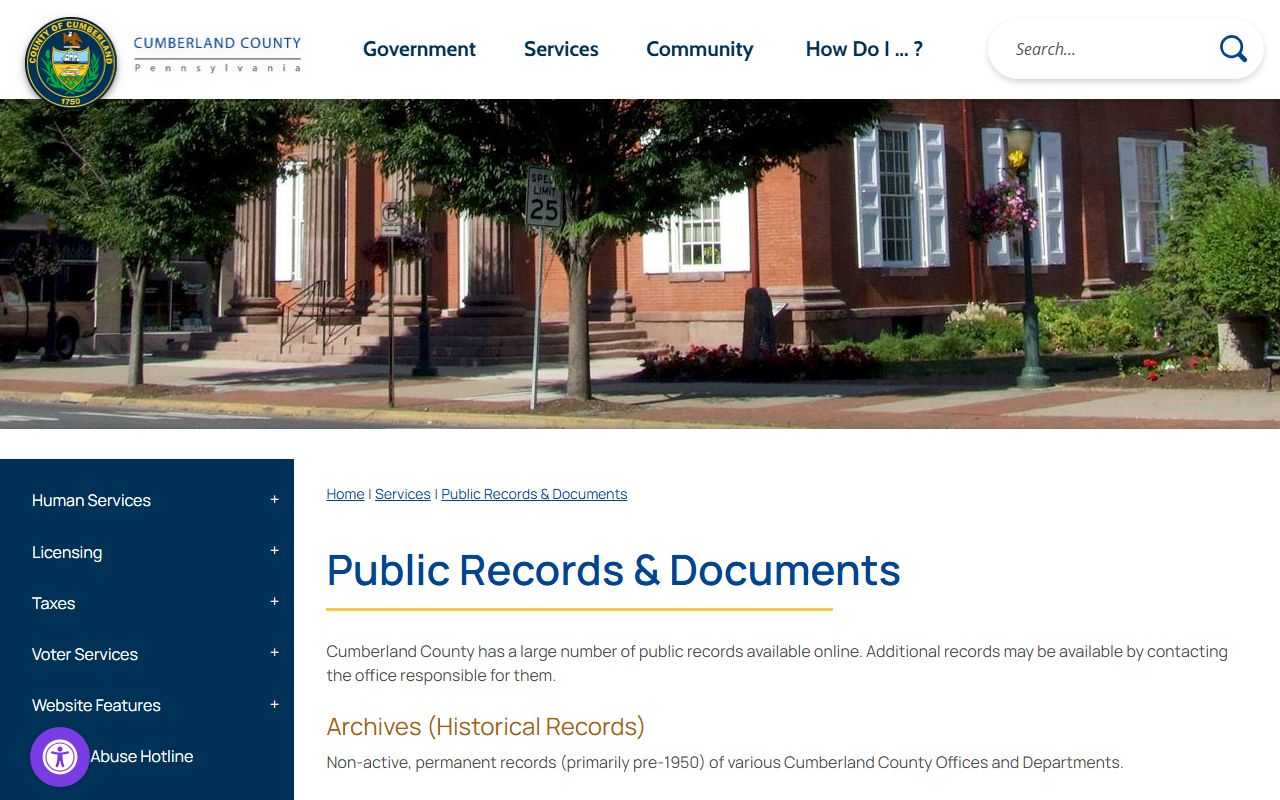
That page names each office and its date range, which is the fastest way to land on the right record.
- Criminal records - Common Pleas dockets, pleas, sentencing, and bail papers held by the Clerk of Courts.
- Civil records - complaints, judgments, liens, and name changes held by the Prothonotary.
- Family and divorce records - divorce and custody files filed through the Prothonotary and Common Pleas.
- Probate records - wills, estates, and guardianships at the Register of Wills and Orphans' Court.
- Traffic records - citations handled in the Magisterial District Courts and searched through the UJS portal.
What Cumberland County Court Records Show
A docket sheet is the public summary of a case. It carries the case number, the people involved, the charges or claims, and how the case ended. Common Pleas criminal dockets begin with CP. Magisterial dockets begin with MJ. The fields below appear on most case records, though some data is held back by law.
| Field | What It Shows |
|---|---|
| Docket Number | The case ID, with a county code and case category (CP for Common Pleas, MJ for district court). |
| Filing Date | When the case was opened with the court. |
| Parties | Plaintiff, defendant, the Commonwealth in criminal cases, and listed attorneys. |
| Charges / Cause | Criminal statute and grade, or the civil claim type. |
| Disposition | The outcome of each charge or claim. |
| Financials | Fines, costs, restitution, and bail entries. |
For a full file you may still need the underlying documents, which are not always attached to a free docket sheet.
Public Access Laws for Cumberland County Court Records
Access in Pennsylvania runs on two tracks. County administrative records follow the Right-to-Know Law. Court case records follow the judiciary's own public-access policy. That is why a request for a county department file goes through Right-to-Know, while a case file goes to the clerk and the statewide docket system. Criminal background checks are a separate State Police function.
A few authorities shape what you can see and what stays sealed.
Key Statutes:
Pennsylvania Right-to-Know Law, 65 P.S. § 67.101 - sets the public right to inspect and copy county agency records under Act 3 of 2008.
204 Pa. Code § 213.81 - the Case Records Public Access Policy that governs court dockets and lists what is excluded.
18 Pa.C.S. § 9122 - sets when a criminal history record must be expunged.
Records That Are Restricted or Confidential
Not every file is open. Juvenile cases are kept out of public view. Expunged and limited-access records drop off the public dockets. Protection From Abuse records are not online under the Violence Against Women Act. By a local court order, all family law cases filed after June 21, 2010 are not available online, though you can view them at the Prothonotary's Office. Adoption and guardianship records can be seen in person only by certain parties. Mental health and medical material is confidential under state law.
To view a sealed file, you usually need to be a party, an attorney of record, or to obtain a court order. The clerk that holds the file can tell you the lawful path before you file anything.
Specialty Courts in Cumberland County
Cumberland County runs treatment courts as an alternative to jail for some defendants. The current programs are Drug Treatment Court, TOMS Court (Together Optimizing Mental Health Solutions), and DUI Court. On July 1, 2025 the system was restructured: the tracks were split into DUI Court and Drug Treatment Court, and the older Overdose Intervention Court was folded into Drug Treatment Court.
Drug Treatment Court targets opioid and stimulant use disorders. It carries a minimum 14-month commitment with therapy, weekly court appearances, and random drug testing, and Judge Jessica Brewbaker presides. All applications go to treatmentcourtapplications@cumberlandcountypa.gov.
Cumberland County Sheriff and Jail
The Sheriff's Office is led by Sheriff Jody S. Smith and works from Room 303 at the courthouse. The office serves court orders, runs court security, transports prisoners, and serves warrants. It also runs the Bench Warrant Division. The county does not publish a public warrant search, so warrant questions go by phone.
The county jail is Cumberland County Prison at 1101 Claremont Road, Carlisle, led by Warden Travis Shenk. For the full roster and booking contacts, see Cumberland County inmate records, and for active warrants and the Bench Warrant Division, see warrant records.
Marriage, Divorce, and Orphans' Court Records
Marriage licenses come from the Clerk of Orphans' Court in Suite 102. A license costs $70 and is valid anywhere in Pennsylvania. Divorce is a Common Pleas matter filed through the Prothonotary, and certified decrees come from that office. Wills and estates are probated by the Register of Wills. See marriage and divorce records and probate records for the full process.
- Testator
- The person who made a will.
- Executor
- The person named in a will to settle the estate, who acts only after the Register grants authority.
- Letters Testamentary
- The document the Register issues that lets an executor act for an estate.
Cumberland County Court Records Fees
Fees depend on the office and the copy you need. Viewing a docket online is often free. Paper copies, certified copies, and name searches carry set fees. The amounts below come from the county fee schedules in effect for 2025 and 2026.
| Item | Amount |
|---|---|
| OnBase civil document, per page to view | $0.08 |
| Photocopy / docket page (Clerk of Courts) | $0.50 per page |
| Clerk of Courts criminal search, per name | $24.75 |
| Certification / exemplification | $13 |
| Marriage license | $70 |
How to Interpret Cumberland County Court Records
Reading a docket takes a little practice. The case caption names the parties. The docket entries list each filing, order, and hearing in date order. A charge is only an accusation. A disposition is the result, such as guilty, not guilty, dismissed, or withdrawn. Do not treat a charge as a conviction. Bail and financial lines track money owed, not guilt. If a docket looks incomplete, the case may be juvenile, expunged, limited access, or simply not yet updated.
Accuracy and Record Limitations
Online dockets are convenient but not the last word. The county updates civil and criminal files daily, yet the statewide portal warns that fresh entries can lag. A docket sheet is also not a certified criminal history; that comes from the Pennsylvania State Police. When a date, a balance, or a status really matters, confirm it with the office that holds the file.
Note: Always confirm a court date, fine balance, or case status with the clerk's office before you rely on an online record for a deadline.
History of Cumberland County Courts
Cumberland County was founded on January 27, 1750 and named for Cumberland, England. It spans 555 square miles, holds more than 270,000 residents, and contains 33 municipalities, with Carlisle as the county seat. The county follows Pennsylvania's row-office model, so court records have always been split among elected officers like the Prothonotary, Clerk of Courts, Register of Wills, and Sheriff.
The county keeps an overview of its founding and makeup. Read the About Cumberland County page for the long view.
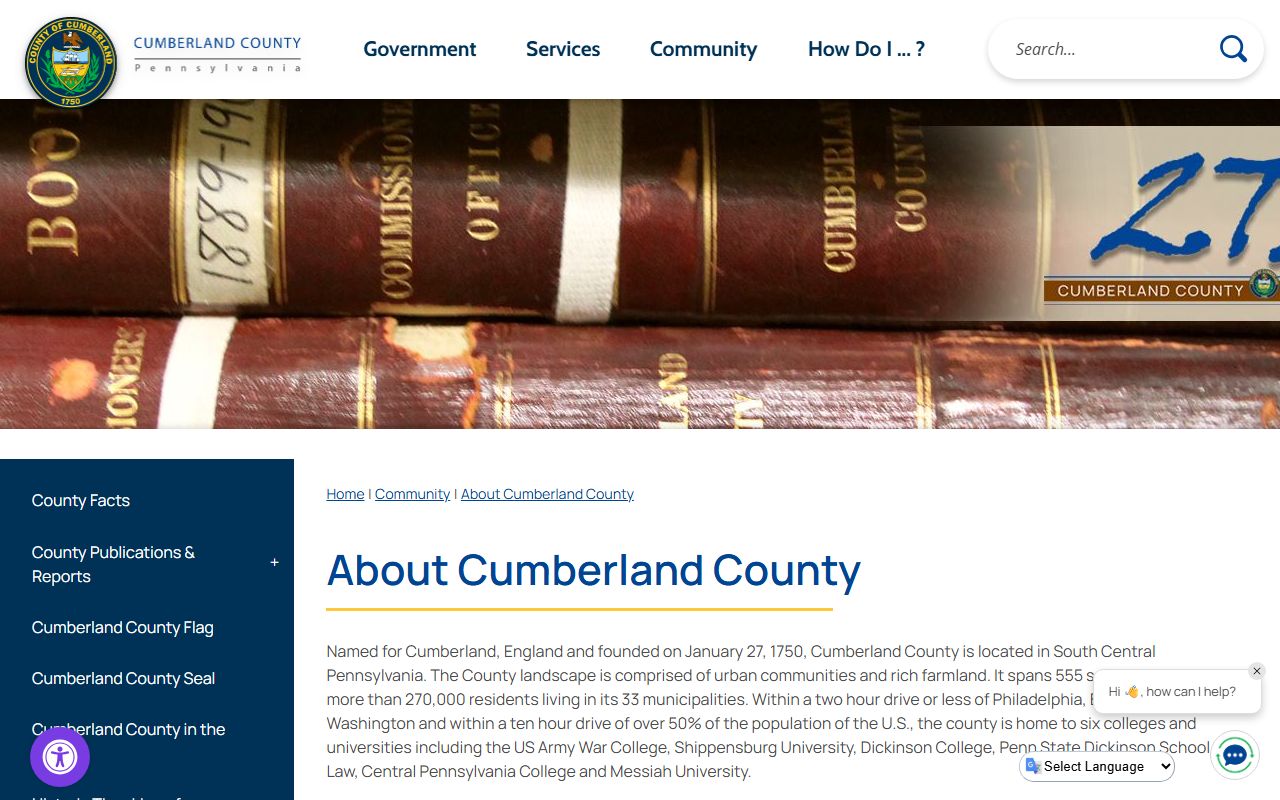
One small landmark detail: the main courthouse still carries its original 1959 slate roof, the subject of a 2026 repair project. The county also publishes a district attorney lineage back to 1850, a sign of long prosecution continuity.
Frequently Asked Questions
Who is the civil clerk in Cumberland County?
The Prothonotary is the civil clerk for the Court of Common Pleas. The office is in Suite 100 at 1 Courthouse Square and keeps civil filings, judgments, liens, and divorce decrees. It is not the criminal clerk. Criminal files go to the Clerk of Courts in Room 205. More detail is on the Prothonotary page.
Can I search Cumberland County criminal cases online?
Yes. Use Pennsylvania's UJS Case Search or the Clerk of Courts criminal link. The county says criminal files from 2001 forward are online and update daily, except juvenile and other non-public files. The portal is docket information, not a certified background check. See arrest records for the full walkthrough.
How do I know if someone is in the county jail?
Cumberland County Prison posts a current inmate listing that shows the total population, a timestamp, and inmate names. It does not show charges, bond, or mugshots. For booking detail, call the prison. The inmate records page covers the roster and contacts.
More on the Cumberland County Court Records FAQ page.