
Active Warrants in Cumberland County
Warrants in Cumberland County are issued by judges and Magisterial District Judges and served by the Sheriff's Office. Sheriff Jody S. Smith leads the office, which works from Room 303 at 1 Courthouse Square in Carlisle. The office serves court orders, provides courthouse security, transports prisoners, and serves both civil and criminal warrants. It does not publish a public, searchable list of active warrants.
When a warrant reaches the Sheriff's Office, the information is entered into at least three systems that forward it to law-enforcement agencies across Pennsylvania. That is why a warrant can be acted on anywhere in the state, not just in the county where it was issued. The office updates its records as warrants are received and cleared.
The Sheriff's Office posts its mission and duties online. See the Cumberland County Sheriff's Office page.
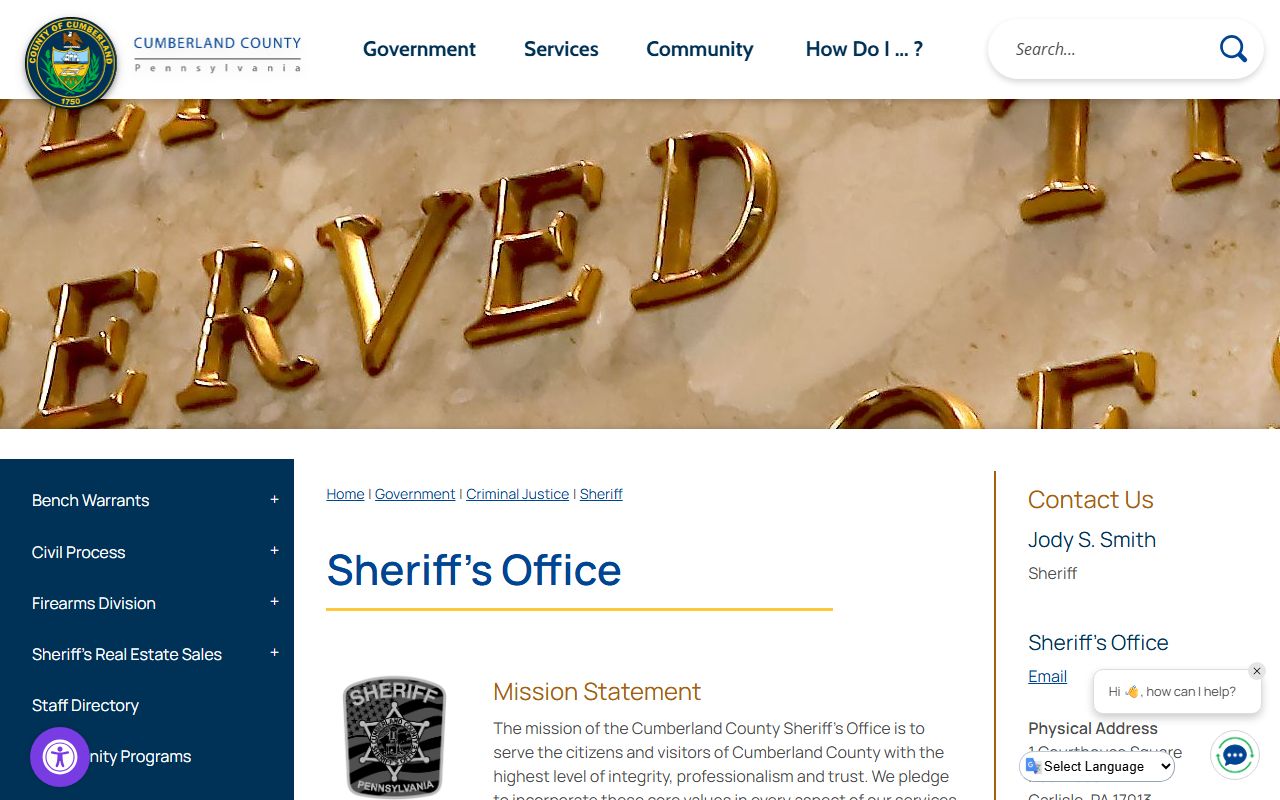
For warrant questions, the office prefers a direct phone call over any third-party site.
Types of Warrants in Cumberland County
Not all warrants are the same. Some follow a missed court date, some follow a criminal complaint, and some allow a search. The county notes that a bench warrant can arise in either a criminal or a civil matter. The main types are below.
- Bench warrant - issued when a person is found in contempt for deliberately violating a court order or condition.
- Arrest warrant - issued after a criminal complaint and a finding of probable cause.
- Search warrant - authorizes a search or seizure and may be sealed.
- Fugitive or extradition warrant - used to return a person from another county or state.
- Probation or parole violation warrant - issued when supervision terms are broken.
A bench warrant authorizes immediate arrest, which is why it should be addressed quickly.
How to Check Cumberland County Warrants
Because there is no public warrant search portal, the reliable path is the Bench Warrant Division. If you believe you may have a warrant, the county instructs you to contact the Sheriff's Office rather than rely on unofficial lists. The Bench Warrant Division main line is 717.240.7322, and the county also lists 717.240.6396 for warrant concerns.
The Bench Warrant Division explains its process and contacts online. See the Bench Warrant Division page.
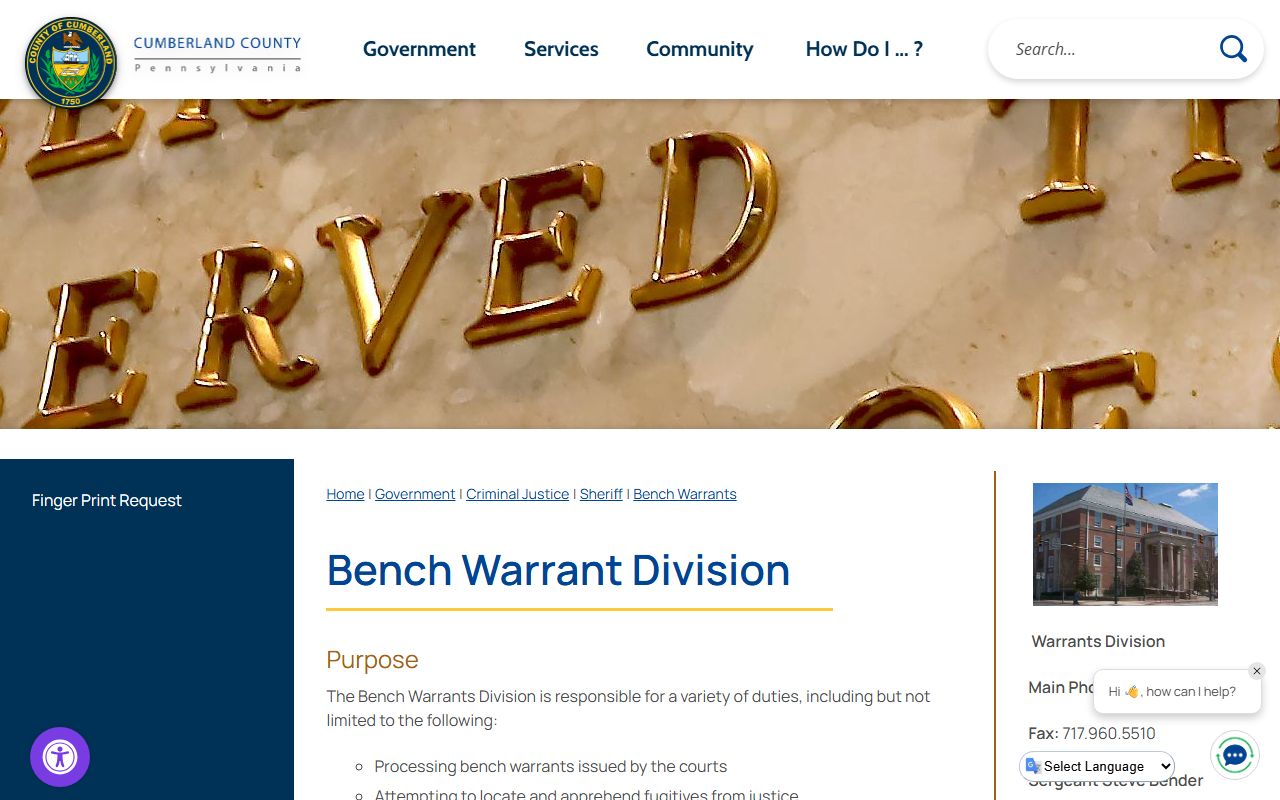
A docket check can add useful clues alongside that call.
- Call the Bench Warrant Division, or speak with an attorney first.
- Search the UJS Case Search for missed court dates, bail entries, or a bench warrant notation.
- Arrange a surrender or appearance through counsel or the Sheriff's Office if advised.
Cumberland County Warrant Search Options
There is no single search box for warrants, so it helps to see what each option can and cannot do. The table sums up the realistic ways to check. A phone call to the warrant division is the most direct, while the statewide docket portal is only a partial clue.
| Option | Type | What It Does |
|---|---|---|
| Public active warrant search | None located | The county does not publish a searchable warrant database. |
| UJS docket search | Online | May show warrant-related entries but is not a full warrant list. |
| Bench Warrant Division | Phone | Call 717.240.7322 or 717.240.6396 about a suspected warrant. |
What a Cumberland County Warrant Entry Shows
When a warrant appears on a court docket, it shows as an event rather than a standalone profile. The county does not expose a public warrant roster with full fields, so the data you can see is limited to what the docket records. The table lists fields that may appear on a docket when a warrant is noted.
| Field | What It Shows |
|---|---|
| Event Entry | A docket line such as bench warrant issued or warrant lifted. |
| Issue Date | The date the warrant event was recorded. |
| Related Charge or Cause | The underlying criminal charge or contempt matter. |
| Issuing Court | The Common Pleas or Magisterial District Court that ordered it. |
| Status | Whether the warrant is open or has been cleared. |
Full active-warrant details are not posted as a county roster, so confirm status with the Sheriff's Office.
Civil and Criminal Bench Warrants
One point surprises many people: a bench warrant is not always tied to a crime. The county states that bench warrants can issue in criminal matters and in civil matters alike. Both arise from contempt, meaning a person deliberately violated an order or condition set by a judge or a Magisterial District Judge.
On the criminal side, a bench warrant often follows a missed hearing, an unpaid obligation, or a probation problem. On the civil side, it can follow contempt in a support, custody, or Protection From Abuse case. The label changes the court that issued it, but the effect is the same: the warrant authorizes an arrest until the matter is addressed. Either way, the Sheriff's Office serves it and enters it into the statewide systems, and either way the fix is to resolve the underlying order.
What to Do If You Have an Outstanding Warrant
An open warrant does not go away on its own. Ignoring it can lead to an arrest at a traffic stop, at work, or at home. The better path is to learn the details, get legal advice, and arrange to address it. Most bench warrants are resolved by clearing the underlying issue, such as a missed hearing, unpaid costs, or a contempt finding.
- Do not rely on unofficial warrant lists.
- Call the Sheriff's warrant number or consult an attorney.
- Check the UJS docket for the cause and any bail entries.
- Address the bail, fines, costs, new court date, or contempt.
- Confirm the warrant is cleared in the court system after resolution.
Important: Talk to a lawyer before turning yourself in, so you understand the charge, the bail, and your options first.
Warrant and Jury-Duty Phone Scams
Scammers use the threat of a warrant to pressure people for money. In January 2025, the Sheriff's Office warned residents about callers who claimed a missed federal jury duty had triggered a federal warrant, then demanded payment by Venmo, PayPal, or gift card. The callers spoofed the Sheriff's main number and even used a sergeant's name. The office says it never requests payment for court-related fines over the phone and does not handle failure to appear for federal jury duty. If you get a call like that, hang up and call the Sheriff's Office directly at 717.240.6390.
Federal Warrants and Enforcement
Some warrants are federal, not county. Federal warrants in this area run through the U.S. Middle District of Pennsylvania. The U.S. Marshals Service handles federal fugitive and court warrants, and the U.S. Attorney's Office prosecutes federal crimes. These are separate from the county Sheriff's bench warrants.
The Marshals publish district courthouse and contact details. See the U.S. Marshals Middle District of Pennsylvania page.
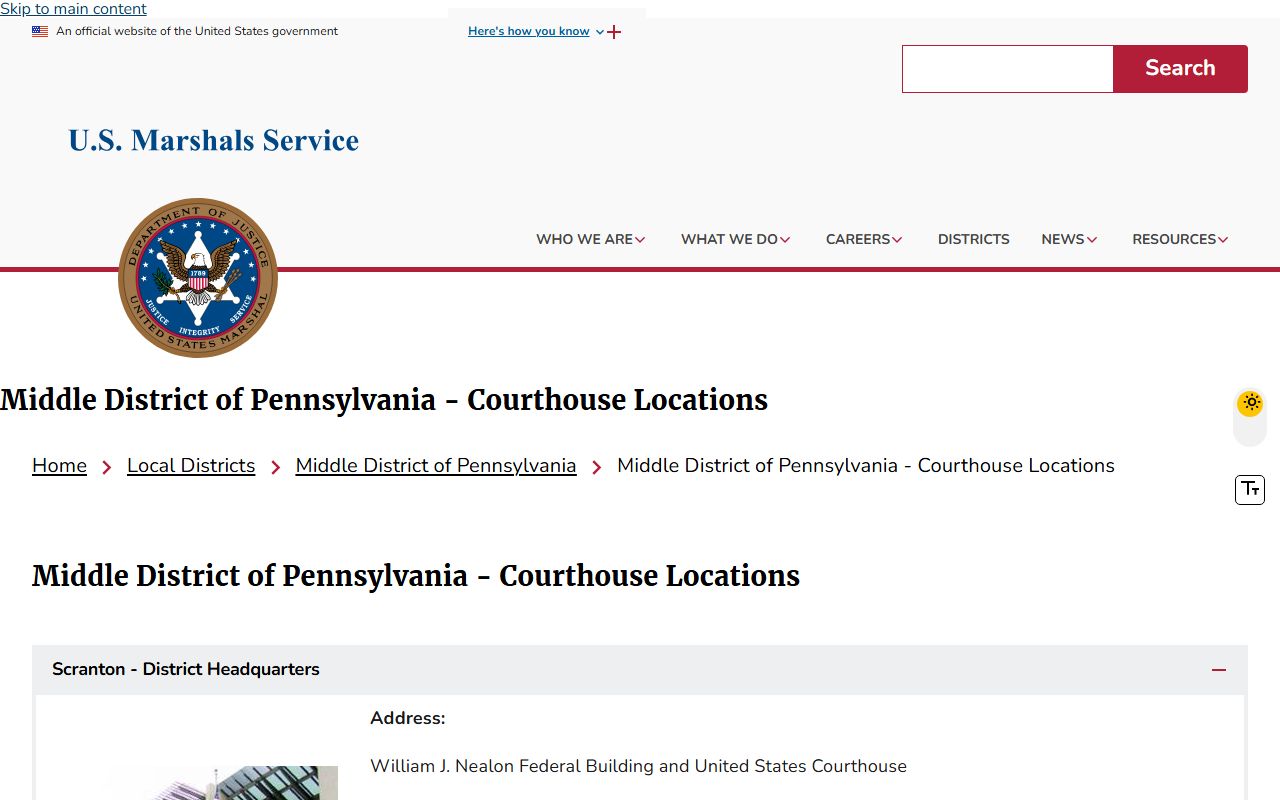
Federal prosecution is handled by a separate office.
The U.S. Attorney's Office for the Middle District of Pennsylvania prosecutes federal crimes and represents the United States in federal court.
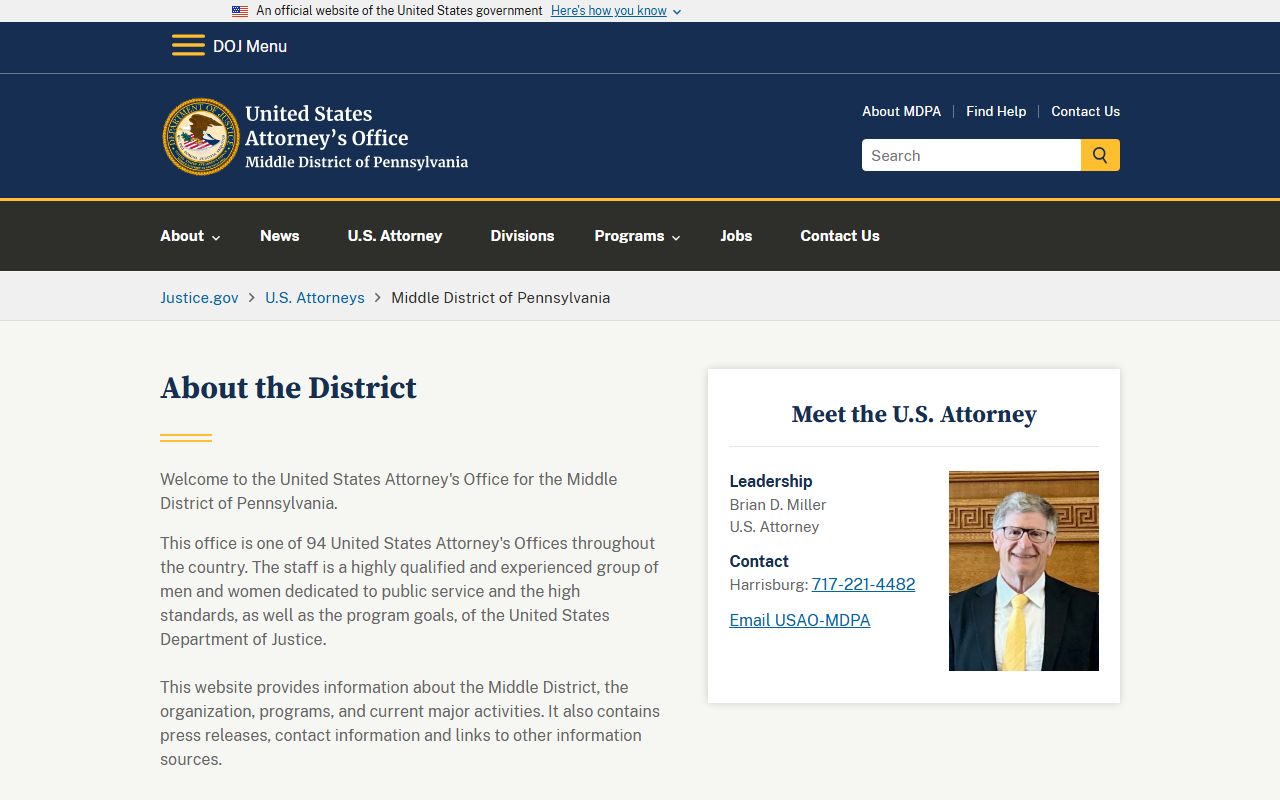
A federal matter will not appear on the county docket or the Sheriff's bench-warrant records.
Sex Offender Registry Search
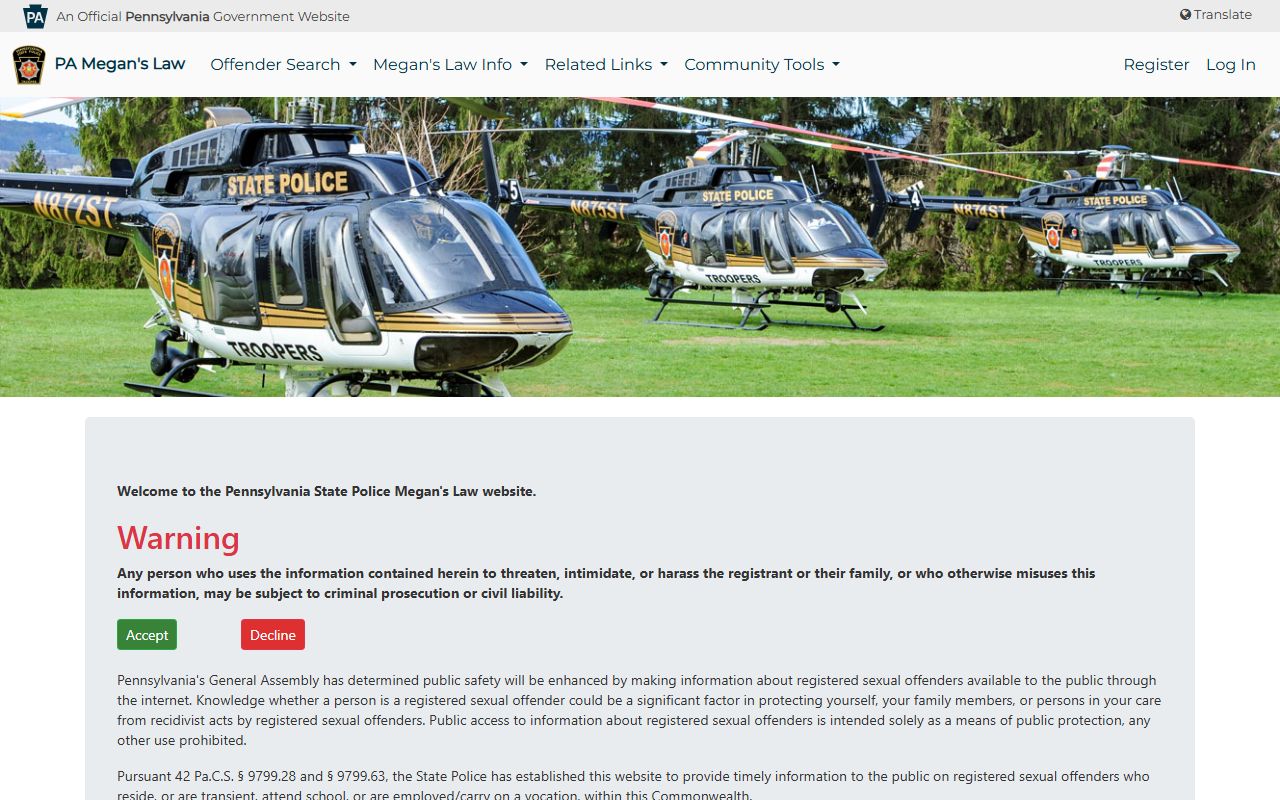
A related public-safety lookup is the state sex offender registry, run under Pennsylvania's Megan's Law. The Pennsylvania State Police website lets the public search by county, municipality, city, ZIP code, name, or a mile radius, and it has dedicated searches for non-compliant and transient offenders. This is a separate tool from warrants, but people checking on safety often need both.
The registry is free to search after you accept the terms. Start at the Pennsylvania Megan's Law website.
Registry data and warrant data are kept by different agencies, so check each at its own source.
Restricted Cumberland County Warrant Records
Not every warrant is open to view. Search warrants can be sealed while an investigation continues, and sealed applications are not public dockets. Warrants tied to juvenile cases follow juvenile confidentiality rules. Grand jury matters are not ordinary public records. Even where a warrant exists, the underlying details may be limited until the matter moves forward in court. When in doubt, ask the Sheriff's Office or the issuing court what may lawfully be shared.