
Pennsylvania Right-to-Know Law
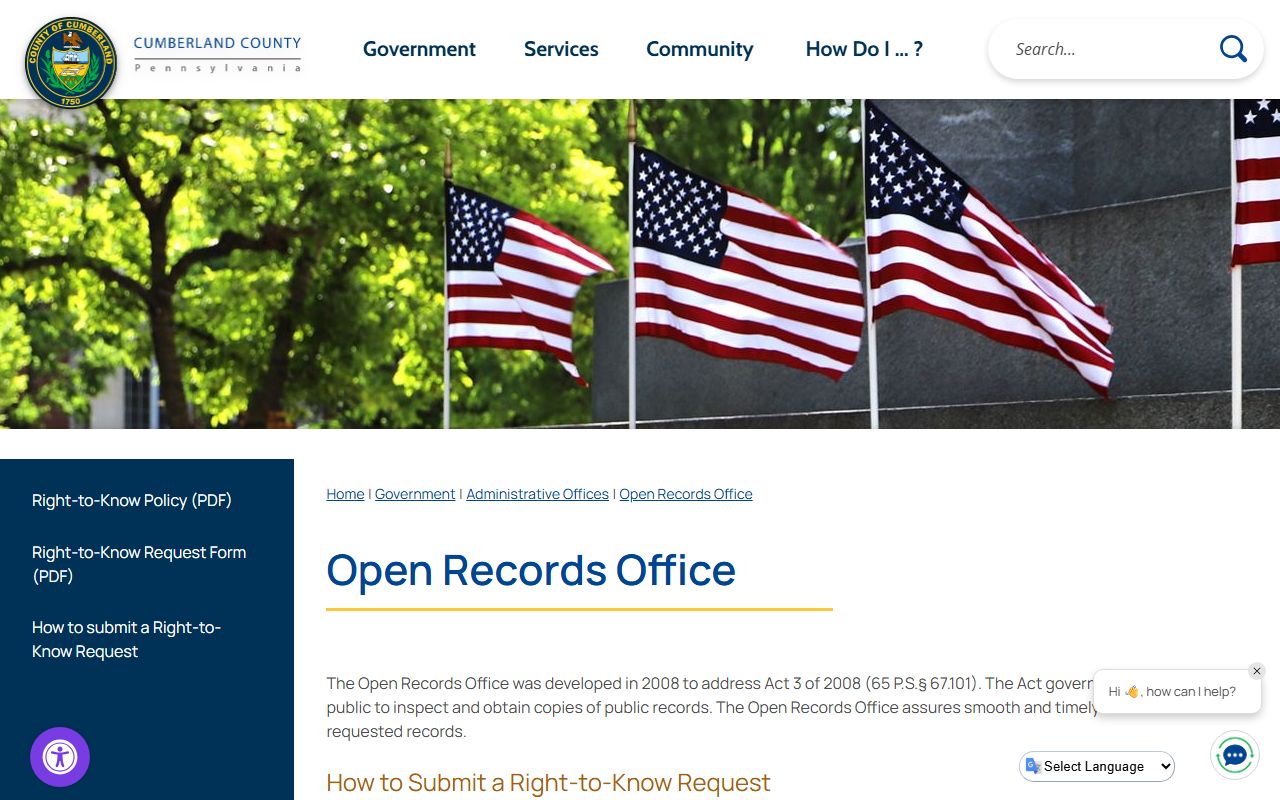
County agency records are governed by Pennsylvania's Right-to-Know Law, 65 P.S. § 67.101, which was strengthened by Act 3 of 2008. The county created an Open Records Office to handle these requests. The law gives the public the right to inspect and obtain copies of public records, and the county notes that a request can be made verbally, in writing, or anonymously in verbal or written form.
The statewide Office of Open Records oversees the process and hears appeals. The county Open Records Office page explains how Act 3 applies locally.
See the Cumberland County Open Records Office page, with appeals overseen at openrecords.pa.gov.
One key rule: a Right-to-Know request must seek records, not ask questions.
What Records the County Maintains
Cumberland County keeps records across many offices, not one central clerk. The Recorder of Deeds holds land records, the Prothonotary holds civil court files, the Clerk of Courts holds criminal files, and the Register of Wills holds estates and marriage records. The county publishes which records are available by office and date range.
- Land and property records held by the Recorder of Deeds.
- Civil and criminal court files held by the Prothonotary and Clerk of Courts.
- Estate, marriage, and Orphans' Court records held by the Register of Wills.
- County agency and administrative records subject to Right-to-Know.
The county lists record availability by office and date. See the Public Records and Documents page.
Court Records vs. Agency Records
This distinction trips up many requesters. The Right-to-Know Law applies to county agency records, like budgets, contracts, and department files. It does not govern court case records, which follow the judiciary's own public-access policy and the clerks' access rules. So a request for a court docket goes to the Prothonotary or Clerk of Courts, or to the statewide portal, not through Right-to-Know.
Getting this right saves time. A Right-to-Know request for an active court file will usually be redirected, because the court is not a Right-to-Know agency for case records. For court files, use the docket and the clerk; for agency records, use Right-to-Know.
There are still more layers. Criminal history checks are a Pennsylvania State Police function, driver histories belong to PennDOT, and federal court dockets live in the federal PACER system. The county does not hold any of those, so a request to the wrong body simply bounces. Matching the record to its keeper is the single biggest time-saver in any records search.
How to File a Public Records Request in Cumberland County
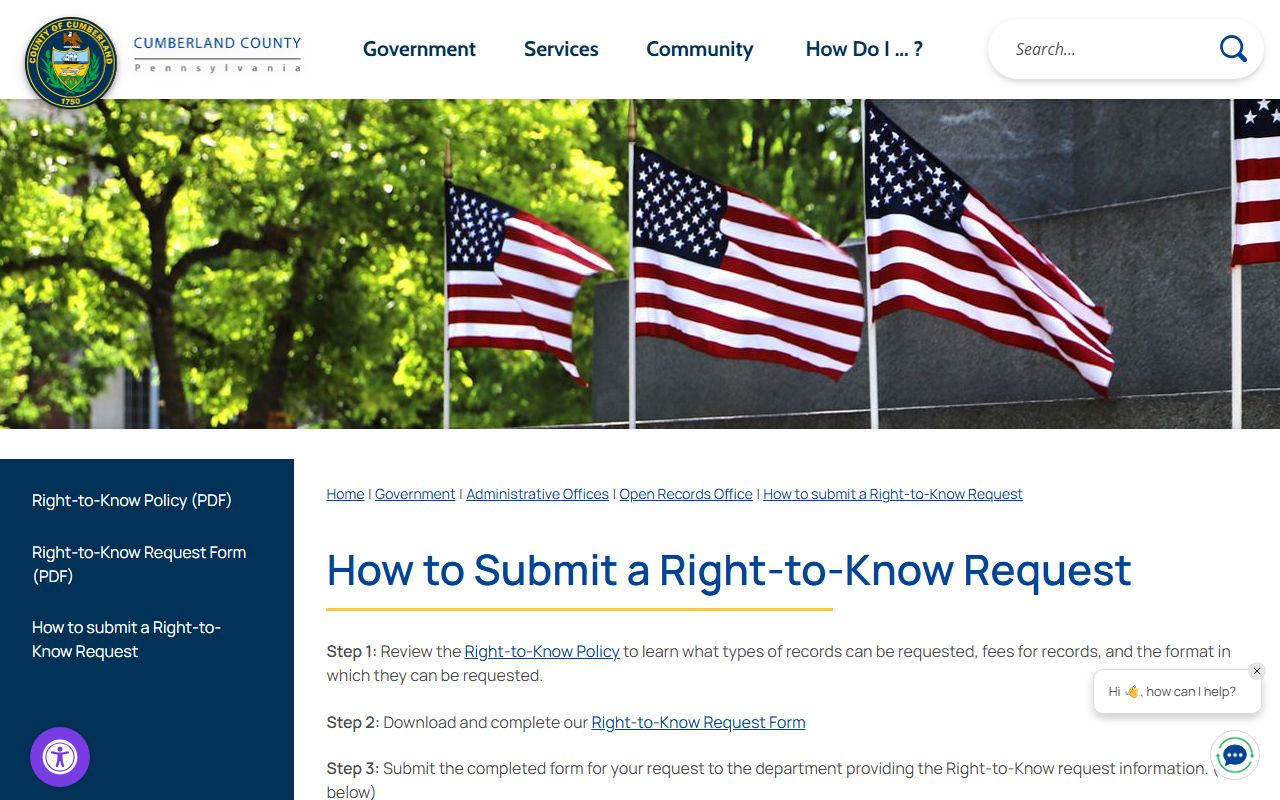
The county routes Right-to-Know requests to the department that holds the record, each with its own contact. You describe the records clearly, choose how you want the response, and submit to the right office. The county posts submission instructions and departmental contacts.
- Identify the office that holds the record, such as the Prothonotary, Clerk of Courts, or a county department.
- Describe the records you want, including subject, time frame, and record type.
- Submit the standard Office of Open Records form by email, mail, fax, or in person.
- Wait for the agency response within the statutory window.
- Pay any copy fees and receive the records.
The county explains submission and lists department contacts. See How to submit a Right-to-Know Request.
For example, a Prothonotary request goes to prothonotary@cumberlandcountypa.gov, and a Clerk of Courts request to clerkofcourts@cumberlandcountypa.gov.
Public Records Request Form Fields
The county accepts the standard Office of Open Records form. It asks who you are, how to reach you, and exactly what records you want. The residency affirmation matters, because the form warns that a false or incomplete statement can affect an appeal. The main fields are below.
| Field | Required | Notes |
|---|---|---|
| Submitted to Agency Name | Yes | Include the office and its Right-to-Know officer. |
| Full Name | Yes | The person making the request. |
| Response method | Yes | Choose email or U.S. mail for the response. |
| Records requested | Yes | Identify records by subject, time frame, and type; do not ask questions. |
| Residency affirmation | Yes | Affirms the request information is true and you are a legal U.S. resident. |
Response Timelines
The Right-to-Know Law sets the clock. An agency generally has five business days to respond to a request. It can invoke a limited extension for reasons the law allows, such as needing legal review or retrieving records from storage. If the agency does not respond in time, the law treats that as a deemed denial, which opens the door to an appeal. Watch the deadlines, because the appeal window is short.
Public Records Fees in Cumberland County
Copy fees follow the county Right-to-Know policy and the statewide Office of Open Records fee limits. Court offices set their own copy and certification charges, which apply when you request from a clerk rather than through Right-to-Know. The figures below are county office charges; confirm the current Right-to-Know copy rate with the office before you request a large file.
| Item | Amount |
|---|---|
| Photocopy at county court offices | $0.50 per page |
| Certification / exemplification | $13 |
| OnBase civil document, per page | $0.08 |
| Right-to-Know copy fees | Per county RTK policy and OOR limits |
Note: the county does not waive the processing convenience fee charged on online card payments.
Driver and Other State Records
Some records people seek are state records, not county ones. Driver histories are kept by PennDOT, not the county or the courts. A driving record is different from a traffic court case, and it is requested through PennDOT's own services. The state explains what driver records contain and how to request them.
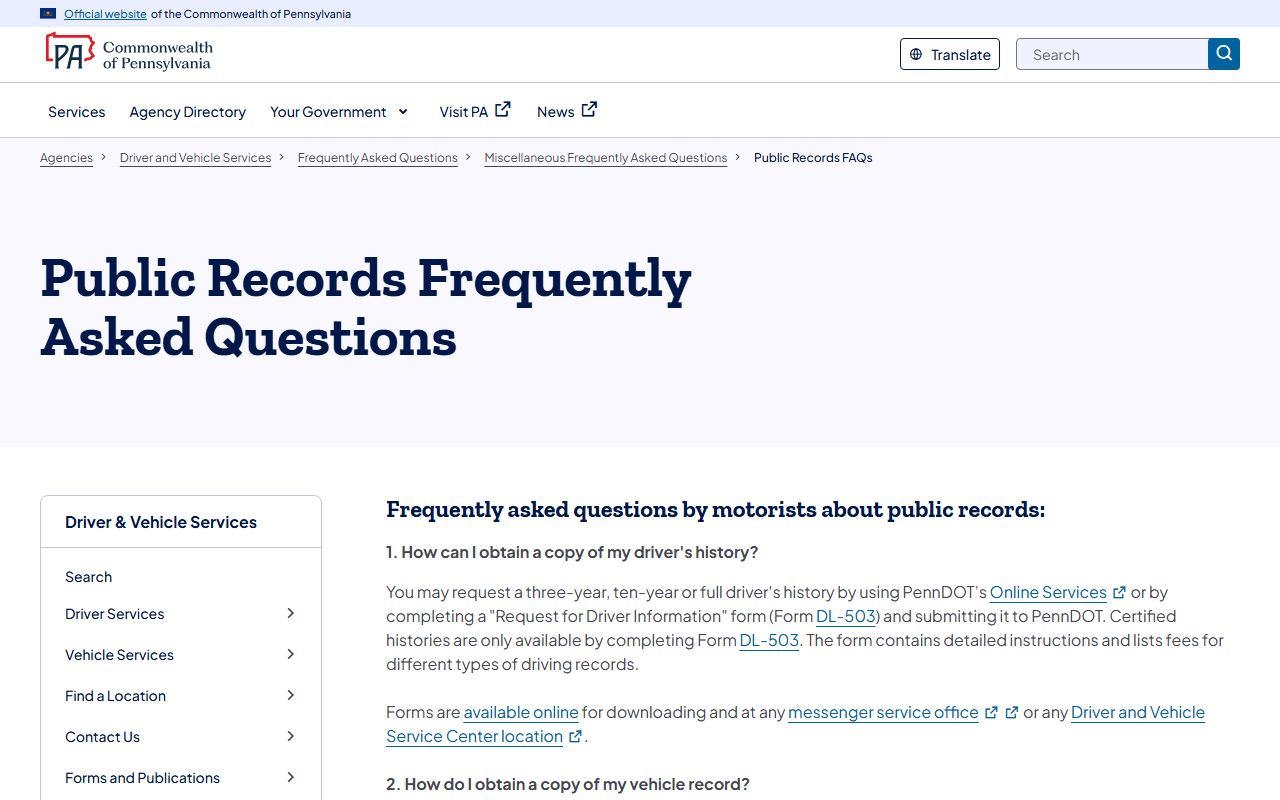
PennDOT answers common public-record questions about driver histories. See the PennDOT public records FAQ.
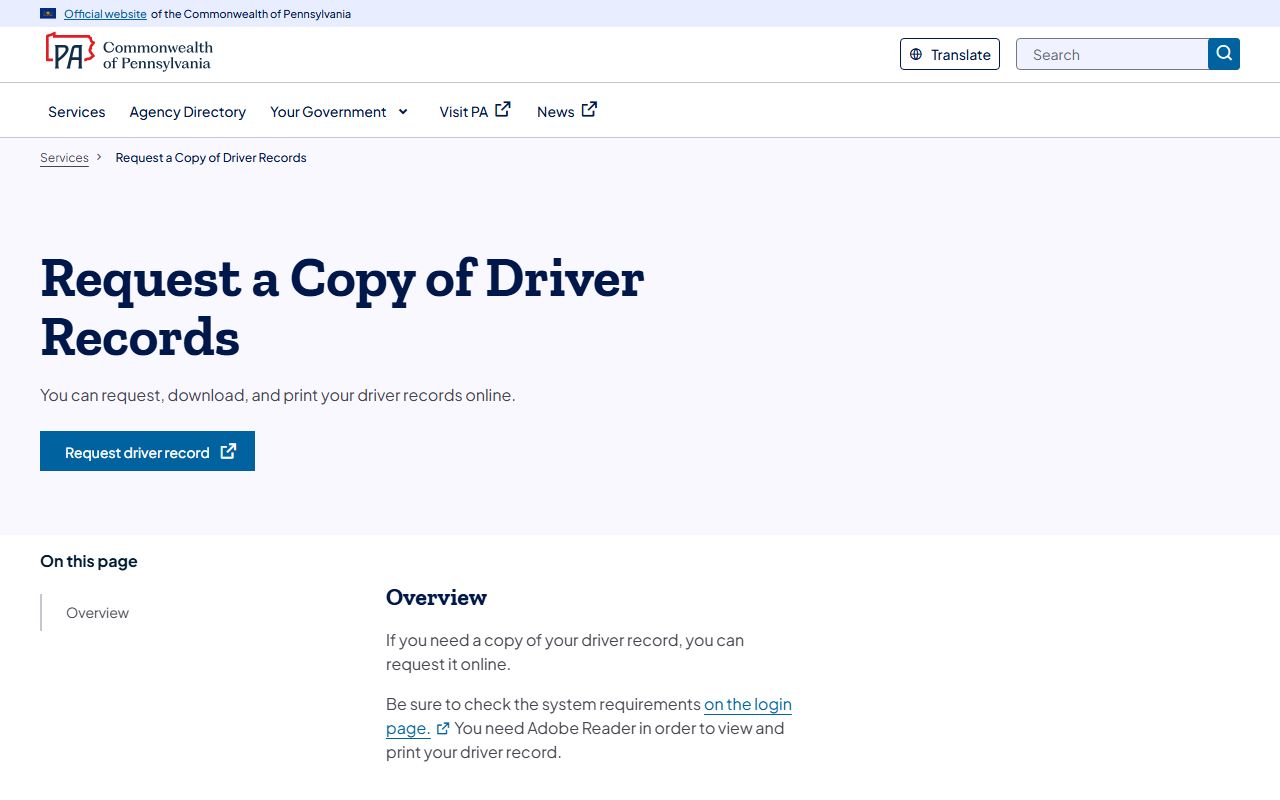
To order an actual driver record, PennDOT runs an online request service.
Request a copy through the PennDOT driver record request page, which requires identity details and payment.
For the court side of a traffic case, see the traffic court records page instead.
Historical and Archived Records
Cumberland County's records run deep, because the county was founded in 1750. The Register of Wills holds estate records from 1750 forward and marriage records from 1885 forward, along with early inheritance tax dockets and birth and death records from the late 1800s and early 1900s. These older records predate the online systems, so they are reviewed in the office rather than searched from home.
Genealogists, title researchers, and historians use these archives often. For modern records, the county's online tools work well, but for anything from the earliest decades, plan an in-office visit or a written request. A research fee applies when staff search by name, so come with as much detail as you can, including names and an approximate date range.
Records That Are Exempt
Not every record is public. The Right-to-Know Law and court access rules withhold several categories. Juvenile records, expunged and limited-access criminal records, adoption and guardianship files, Protection From Abuse records, and confidential mental health or medical material are all restricted. Personal identifiers like Social Security numbers are protected too. An agency can also withhold records tied to ongoing investigations or otherwise exempt under the law.
If Your Request Is Denied
A denial is not the end. If a county agency denies a Right-to-Know request, or the request is deemed denied after the response window, you can appeal to the Pennsylvania Office of Open Records. The appeal must be filed within the law's deadline, so act quickly and keep your paperwork. The Office of Open Records reviews the agency's decision and can order records released. Court-record disputes follow the judiciary's process instead, since those are not Right-to-Know matters. A clear, well-described request is easier to defend on appeal, which is one more reason to identify the records precisely the first time.